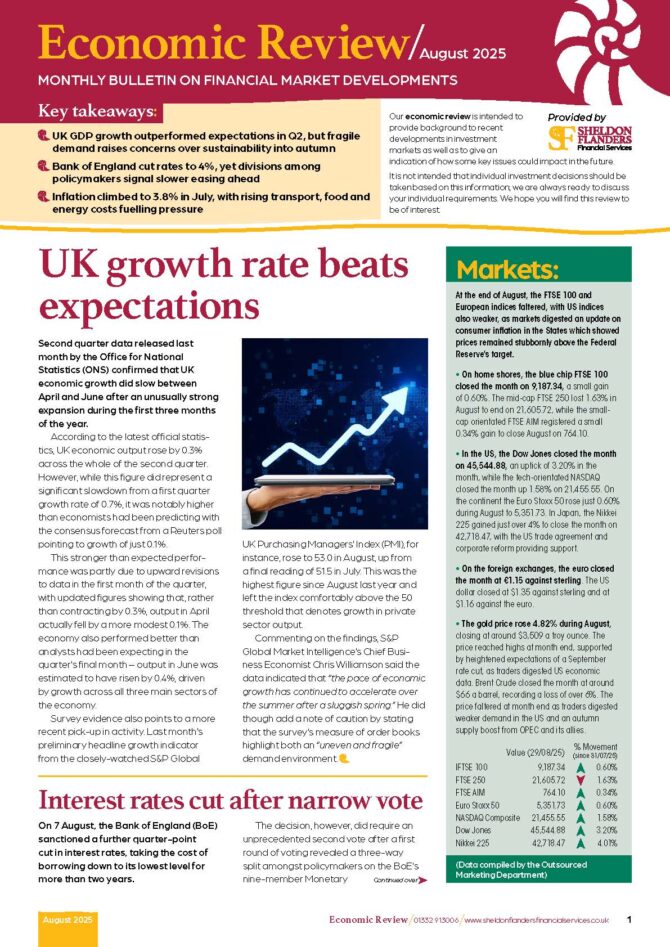
Our economic review is intended to provide background to recent developments in investment markets as well as to give an indication of how some key issues could impact in the future. It is not intended that individual investment decisions should be taken based on this information; we are always ready to discuss your individual requirements. We hope you will find this review to be of interest.
Financial health is financial wealth.
If you want to be financially healthy, please book an initial meeting and let’s discover if we can help you
Data released by the Office for
National Statistics (ONS) revealed that
total retail sales volumes rose by 0.3%
in July; this was the first increase in
three months and confounded economists’ expectations of a small monthly
decline. Growth was largely driven by
a surge in online and mail order sales,
which recorded their sharpest rise
since December.
July saw Amazon hold its annual
Prime Day promotion, although ONS
did say that greater spending was seen
across a number of online retailers, with
sales figures boosted by ‘a range of
offers and promotions.’ The British Retail
Consortium also noted that ‘the summer
sunshine’ had provided a boost to the
figures, with sales of ‘summer clothing,
air conditioning appliances and outdoor
foods’ all benefitting from record
temperatures.
Figures released last month by the Office for National Statistics (ONS) revealed that the economy returned to growth in May after contracting during April. In total, UK economic output rose by 0.5% across the month, significantly exceeding the consensus forecast from a Reuters poll of economists which had predicted zero growth.
ONS said the main sectors of the economy all expanded during May including construction, travel and manufacturing. The data also revealed significant growth within health services as one of the key drivers of growth during the month.
In spite of May’s rebound, analysts still expect the economy to come under increasing pressure in the coming months as the cost-of-living squeeze weighs heavily on households’ ability to spend. Recent survey evidence also points to weaker growth, with July’s preliminary headline reading of S&P Global’s Purchasing Managers’ Index recording the weakest rise in UK private sector business activity for 17 months.
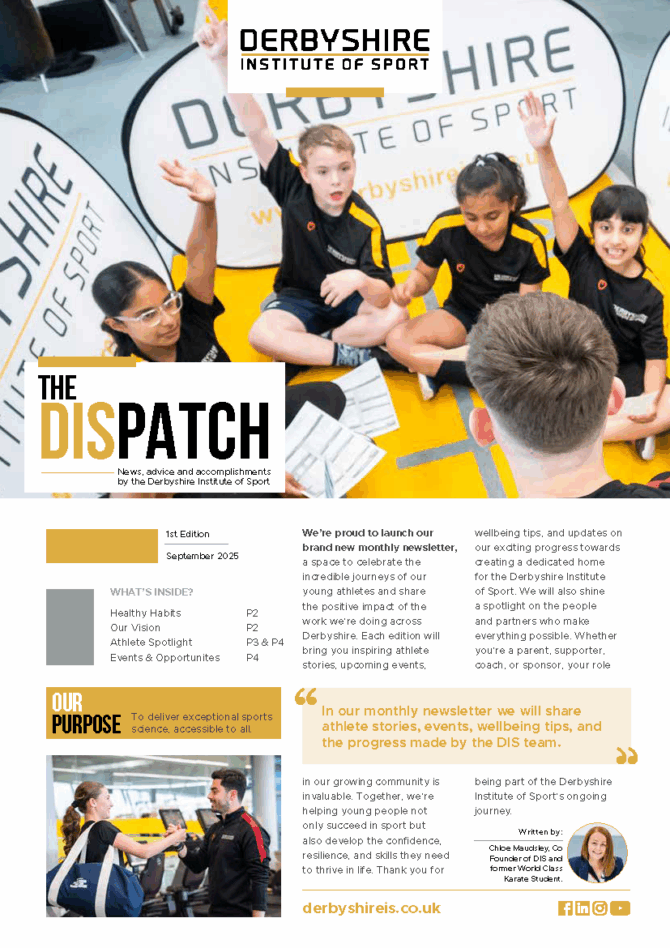
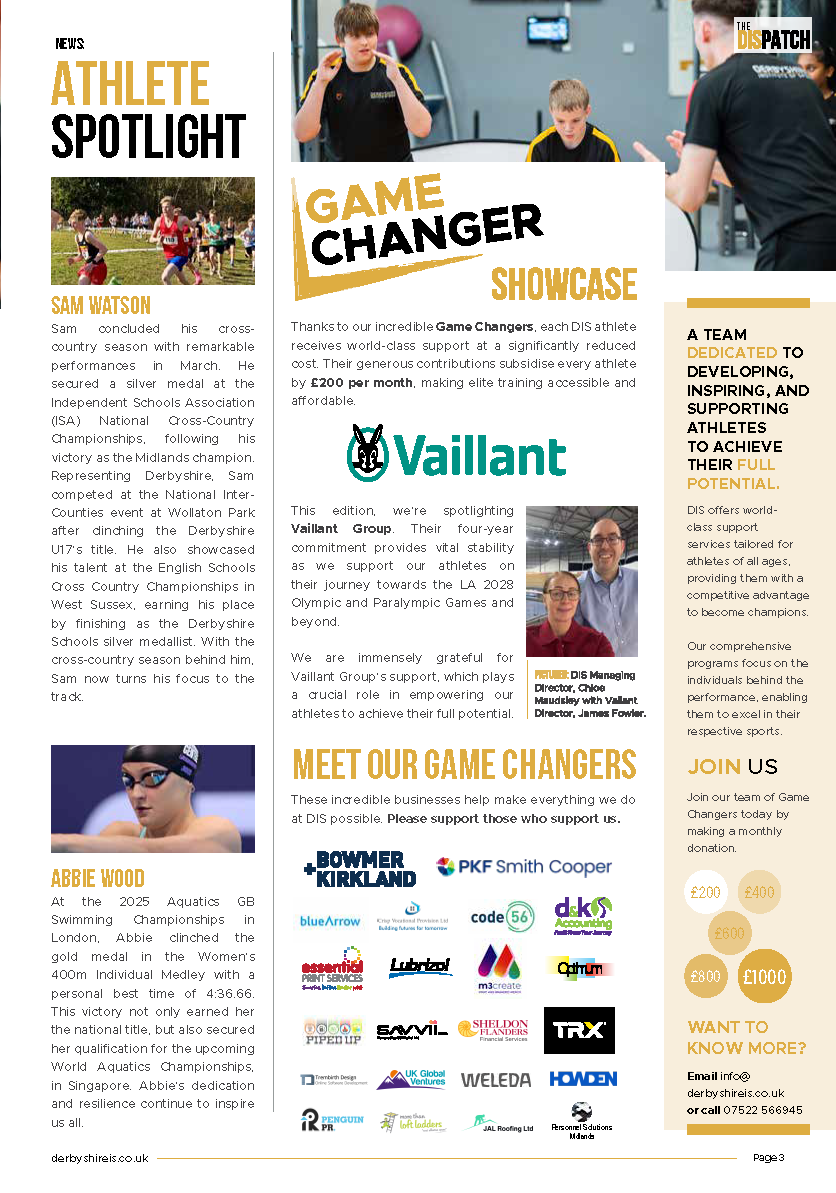
We are pleased to announce that we have become the latest silver sponsor of the Derbyshire Institute of Sport (DIS).
Based at Derby Arena the DIS provides bespoke support to individual athletes, sports teams and club members to enable them to achieve success. Services include physiotherapy, nutrition, strength and conditioning training and performance psychology.
Karen Sheldon at the Derbyshire Institute of Sport
Sheldon Flanders Financial Services provides independent financial advice including pensions and investments advice to clients across the East Midlands. It is committed to responsible investing and offers clients investment portfolios which focus on environmental and socially responsible funds.
Karen Sheldon is the founder and Managing Director. She commented: “As experienced financial advisers we know that responsible investing long term brings rewards for the future. Working with the Derbyshire Institute of Sport we are excited to invest in the talent of local athletes and know that we are helping to support the gold medal winners of the future.
“Our motto is ‘financial health is financial wealth’ – so we can think of no better way to support our local community than an organisation which is committed to developing the health and fitness of young people at the very highest level.”
DIS Managing Director Chloe Maudsley said: “We have a mission to support talented young people achieve their highest sporting potential. We work tirelessly to keep our costs for athletes as low as possible through a range of fundraising activities and sponsorship agreements. We are delighted that Sheldon Flanders has agreed to be our latest sponsor and we know that their support will make a difference to the young people we coach.”
The latest gross domestic product (GDP) statistics show the UK economy unexpectedly shrank in April, increasing concerns about future growth prospects. Data released by the Office for National Statistics (ONS) revealed that the economy shrank by 0.3% in April following a fall of 0.1% in March; this was the first contraction in two consecutive months since the start of the pandemic. April’s figure was also much weaker than analysts had been expecting, with the consensus forecast from a Reuters poll of economists predicting a growth rate of 0.1%. ONS said a key driver behind April’s decline was a ‘significant reduction in NHS Test and Trace activity.’ It also noted some ‘common themes’ reported by firms across different industries, with many saying increases in the cost of production and supply chain shortages had affected their business. Commenting on the UK’s economic outlook the same day as the GDP figures were published, CBI Director General Tony Danker said the business group was “expecting the economy to be pretty much stagnant” and that “it won’t take much to tip us into a recession.” More recent survey data from S&P GlobalX’s closely watched Purchasing Managers’ Index also suggests the economy is showing signs of stalling. While the preliminary headline figure for June was unchanged at May’s 15-month low of 53.1, the index measuring new orders fell to 50.8, the weakest growth rate for over a year, with manufacturing order books dipping below the 50.0 growth threshold to 49.6. Chris Williamson, Chief Business Economist at S&P Global Market Intelligence said, “The economy is starting to look like it is running on empty. Current business growth is being supported by orders placed in prior months as companies report a near-stalling of demand. Business confidence has now slumped to a level which has in the past typically signalled an imminent recession.”
We use cookies to ensure that we give you the best experience on our website. If you continue to use this site we will assume that you are happy with it.